Jiu Jitsu as Safe Space: A Design for Stitched Expression
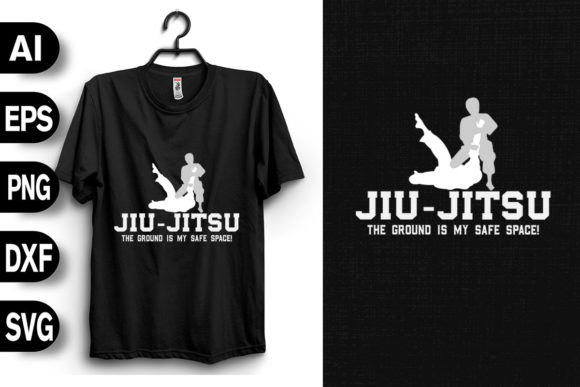
When you work with designs day in and day out, you develop a sense for which ones are merely decorative and which ones carry a genuine spirit—a feeling that translates beautifully through thread. I looked at Jiu Jitsu the Ground is My Safe Space with that designer’s lens, imagining it not as a flat graphic on a screen, but as a textured, stitched piece on a real product. My first impression was its confident, grounded simplicity. It doesn’t shout; it states. The layout is clean, centered, and built around that powerful, personal phrase. This isn’t a chaotic action scene; it’s a declaration of mindset. That makes it belong naturally to embroidery projects meant for wearables people connect with emotionally, not just visually.
Where This Design Finds Its Best Home
I immediately pictured this on a heavyweight cotton sweatshirt or a sturdy canvas tote bag. The message is strong and personal, perfect for items used daily, where a bit of philosophy meets practicality. I recently had a client request a gift for her husband, a dedicated practitioner, who wanted something meaningful but not flashy for the gym. This design came to mind instantly. It’s the kind of statement that resonates on a custom apparel piece—a hoodie, a t-shirt, a training bag—where the embroidery itself becomes part of the garment’s identity.
Beyond apparel, consider it for a well-made embroidered patch. A patch allows the design to be versatile—it could be applied to a car seat, a gear bag, or even framed as a small token. The clean lettering and theme also lend themselves beautifully to personalized gifts like pillow covers for a home office or a neat kitchen towel for that enthusiast who loves their morning coffee with a reminder of their passion. For small business merchandise or Etsy listings catering to the martial arts community, this design adds value by speaking directly to a shared experience.
The Practical Stitch Considerations
Moving from concept to hoop, the real test begins. The clarity of the phrase “The Ground is My Safe Space” is its greatest asset, but in machine embroidery, that clarity depends on execution. For a clean finish, especially on fabrics like fleece or textured canvas for a tote bag, you’ll want to pay close attention to stitch density. Too dense on a thin t-shirt might cause puckering; too light on a thick sweatshirt might look sparse. Always, always test on scrap fabric first, using the same material and weight as your final project.
The design likely relies on satin stitches for the lettering and perhaps fill stitches for any supporting elements. On dark fabric, thread color contrast is paramount. A bright white or a silver grey could make this pop stunningly. On light fabrics, a bold black or navy would ground it. Remember, the fabric texture interacts with the stitch type. A smooth polo shirt for a cap will give a sharper satin edge than a fuzzy sweatshirt.
Caution Zones: Where to Proceed Carefully
This design’s strength is in its statement, which means the lettering is the hero. On very small hoop sizes or items like the curved surface of a cap, the smaller details within the lettering could get lost or become challenging. If the design has intricate decorative accents, they might not translate well onto stretchy fabric without proper stabilizer. I’d avoid using it on very delicate, thin fabrics where the stitch density might overwhelm the material. Similarly, for products destined for frequent washing, like baby clothes or kitchen towels, a simpler, less dense version of the embroidery file might ensure longevity.
One of my standard practices is to test the design in black and white mockups as well. This helps visualize how it holds up purely on form, without color, ensuring the message is clear even in a two-tone scheme. It’s a good check for visual appeal and stitching clarity.
How This Embroidery Elevates Your Project
From a maker’s perspective, choosing a design like Jiu Jitsu the Ground is My Safe Space isn’t just about adding decoration; it’s about adding context. For the end customer, an embroidered piece with this phrase on a high-quality sweatshirt feels thoughtful and authentic. It increases the perceived product value because it reflects a personal identity, not just a generic logo. That builds customer trust and engagement—they’re buying a story, not just stitches.
For your craft business, using designs with such clear thematic resonance aids in brand consistency if you cater to a niche community. It tells your customers you understand their world. The handmade presentation of embroidery adds a layer of care that a printed graphic sometimes lacks, making items more giftable and special for occasions like holidays or recognition gifts.
Essential Designer Notes Before You Stitch
Before you commit this to a final embroidery project, make a checklist. First, review the stitch density and small details on your screen at 1:1 scale. Zoom in. Look for any corners or tiny areas that might need adjustment for your specific hoop size. Compare how it looks on light and dark fabric backgrounds in your software to plan your thread palette.
Secondly, and crucially, understand the license. The product description mentions it’s a design file for various purposes. As a professional, you must confirm licensing before selling finished items or digital products. Is it cleared for commercial use? For physical products? For resale as an embroidery file itself? Never assume.
Finally, think about the complete journey. From the digital file to the stabilizer on your fabric, to the thread colors selected, to the final press—each step impacts how this design lives on the material. When stitched well on an appropriate item, Jiu Jitsu the Ground is My Safe Space transitions from a graphic into a wearable, usable piece of expression. That’s the goal: an embroidery that feels as solid and meaningful as the ground it speaks of.